
Automating Lead Handoff from Shopify Forms to Salesforce CRM via Zapier
Create enterprise Salesforce Leads and Opportunities automatically from quote forms with custom field mapping and automated sales rep assignment.
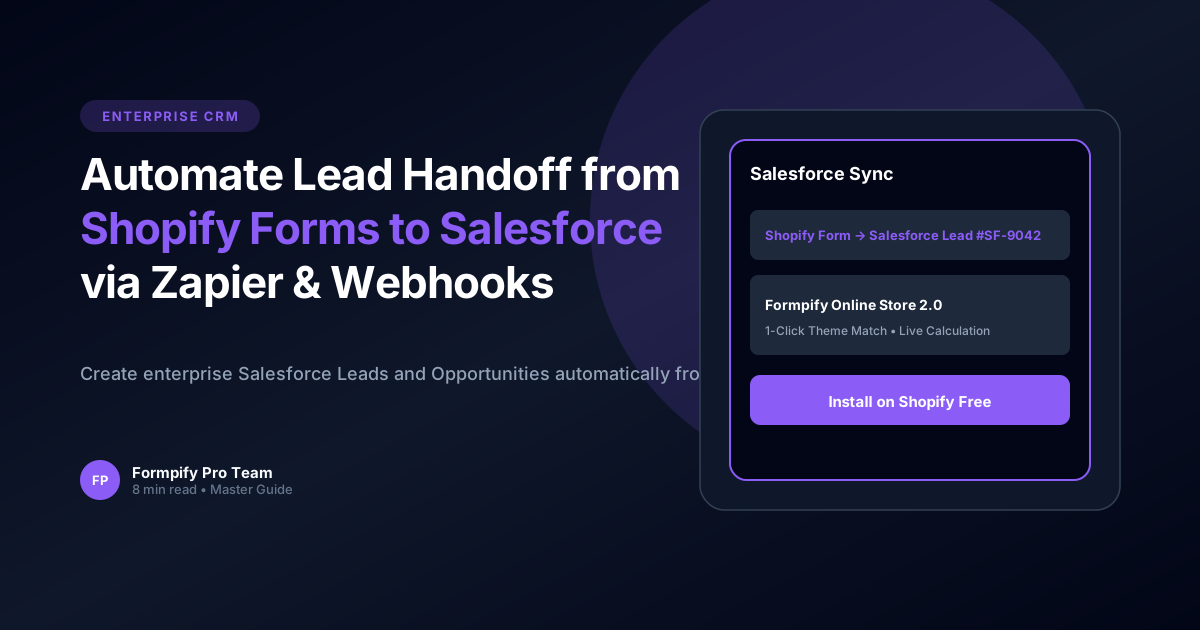
- Enterprise merchants use Salesforce to manage complex B2B sales pipelines and contract renewals.
- Formpify pushes form submissions to Salesforce Leads in real time via Zapier or direct webhooks.
- Maps Company Name, Annual Revenue, and Requested Product Lines directly to Salesforce fields.
- Triggers instant Salesforce email alerts to regional account directors.
Table of Contents
1. Why This Solution Drives Higher Storefront Conversions
Create enterprise Salesforce Leads and Opportunities automatically from quote forms with custom field mapping and automated sales rep assignment.
In modern e-commerce, static forms and rigid default templates often create significant friction for buyers. When prospective customers cannot easily convey their unique requirements or receive immediate pricing feedback, abandonment rates soar past 60%. Implementing Automating Lead Handoff from Shopify Forms to Salesforce CRM via Zapier directly on your Shopify storefront eliminates these bottlenecks, transforming passive site traffic into highly qualified, ready-to-buy inquiries.
Whether you operate a direct-to-consumer brand, a bespoke manufacturing workshop, or a fast-scaling B2B wholesale operation, offering intuitive, branded form experiences builds immediate consumer trust and establishes a clear competitive advantage over generic storefronts.
Key Insight for Shopify Merchants
Enterprise merchants use Salesforce to manage complex B2B sales pipelines and contract renewals.
2. Core Architecture & Essential Capabilities
Building an effective workflow on Shopify requires a balance of visual aesthetics, intuitive form controls, and seamless backend data synchronization. Formpify makes this possible with zero coding required.
Here are the primary architectural capabilities powering this workflow:
- Key Feature: Formpify pushes form submissions to Salesforce Leads in real time via Zapier or direct webhooks.
- Key Feature: Maps Company Name, Annual Revenue, and Requested Product Lines directly to Salesforce fields.
- Key Feature: Triggers instant Salesforce email alerts to regional account directors.
By organizing complex selections into clear, digestible steps, customers remain engaged and confident throughout the entire interaction.
3. Step-by-Step Setup & Implementation Guide
Setting up this workflow in your Shopify store takes only a few minutes. Follow these practical steps inside the Formpify visual builder:
- Select or Create Your Form: In your Shopify Admin, open the Formpify app and click Create Form, or choose a specialized pre-built template from the template library.
- Add & Customize Fields: Drag the required field types (such as Card-style Radio, Dynamic Checkboxes, Number Inputs, Date Pickers, or File Uploads) onto your form canvas.
- Configure Rules & Formulas: Open the right-hand settings panel to assign conditional visibility rules, mathematical pricing formulas, or required validation parameters.
- Connect Integrations & CRM: Link your form directly to your email platform (Klaviyo, Mailchimp, Omnisend) or CRM (HubSpot, Salesforce, Google Sheets) for automatic lead dispatch.
- Embed in Your Theme: Open the Shopify Online Store 2.0 Theme Editor and add the Formpify App Block to any product template, landing page, or slide-out drawer.
⚡ Pro Implementation Tip
Always preview your form across mobile screen sizes. Formpify's card-style inputs and lightweight embed engine ensure sub-50ms execution and frictionless touch-friendly interactions on all smartphone devices.
4. Best Practices for Long-Term E-commerce Growth
To maximize lead conversion rates and maintain an exceptional user experience, implement these proven best practices:
- Progressive Disclosure: Keep initial questions simple and concise. Use conditional logic or multi-step flows to reveal detailed questions only when necessary.
- Transparent Estimates: If providing pricing or deposit totals, itemize base rates, add-on options, and applicable taxes clearly so buyers understand exactly what is included.
- Automated Follow-ups: Send an immediate branded PDF receipt or auto-responder email to confirm receipt and set clear expectations for next steps.
- Data Hygiene & Security: Leverage built-in Google reCAPTCHA v3 and Honeypot spam traps to ensure your database remains clean and protected against bot submissions.
By pairing clean frontend design with robust backend automation, your store can scale inbound quote inquiries efficiently without increasing manual administrative workload.
Connect Salesforce via Zapier
Explore Formpify’s Zapier integration.
Explore More Shopify Form Guides
 Tutorials
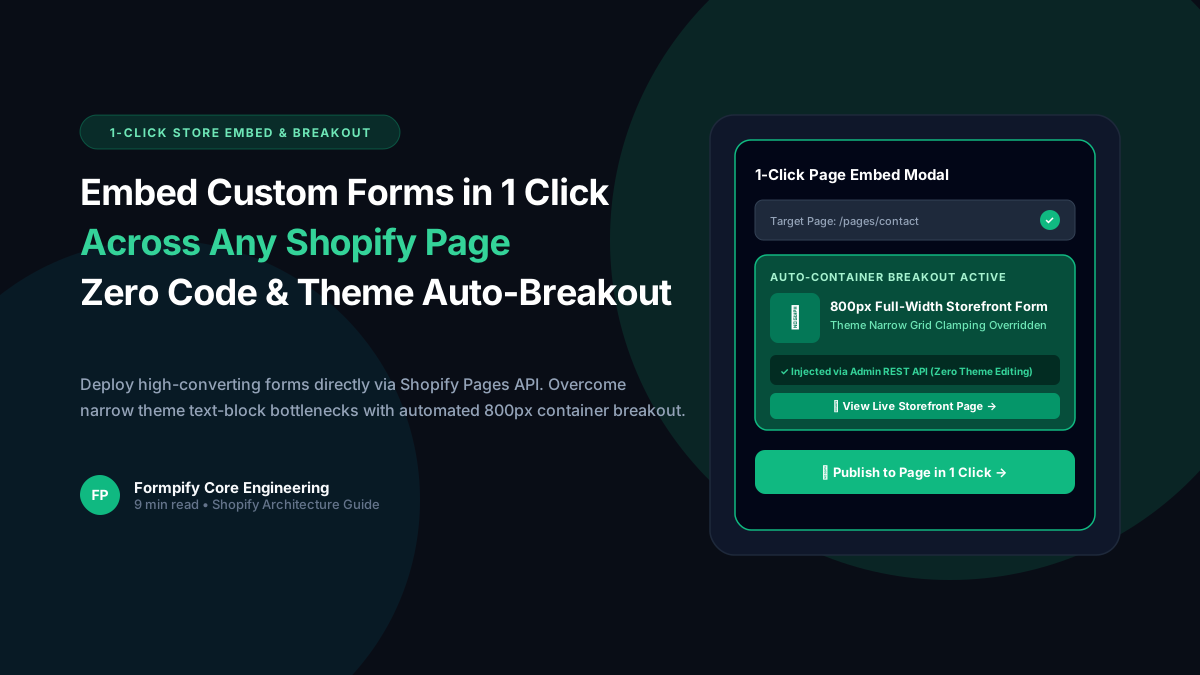
How to Embed Custom Forms on Any Shopify Page in 1 Click (Zero Liquid Code, Theme Auto-Breakout & Full-Width 800px Support)
Past Shopify form apps force merchants to manually copy liquid snippets, edit theme files, or suffer from cramped 360px mobile widths on desktop screens. Discover how Formpify v2.3.1 introduces seamless 1-click Store Page auto-embedding via Shopify Admin REST API and intelligent Theme Container Breakout for perfect 800px full-width forms.
 Tutorials
How to Build Advanced Dynamic Pricing Calculators on Shopify with Safe AST Math Formulas & Conditional Logic
Selling dimension-based items like custom glass, canvas prints, blinds, flooring, or bespoke upholstery? Standard Shopify variant pricing cannot calculate length × width formulas or conditional volume discounts. Discover how Formpify's Safe AST Math Formula Engine evaluates complex algebraic equations in real time without eval() vulnerabilities, keeping Canvas and Storefront in 100% sync.
 Tutorials
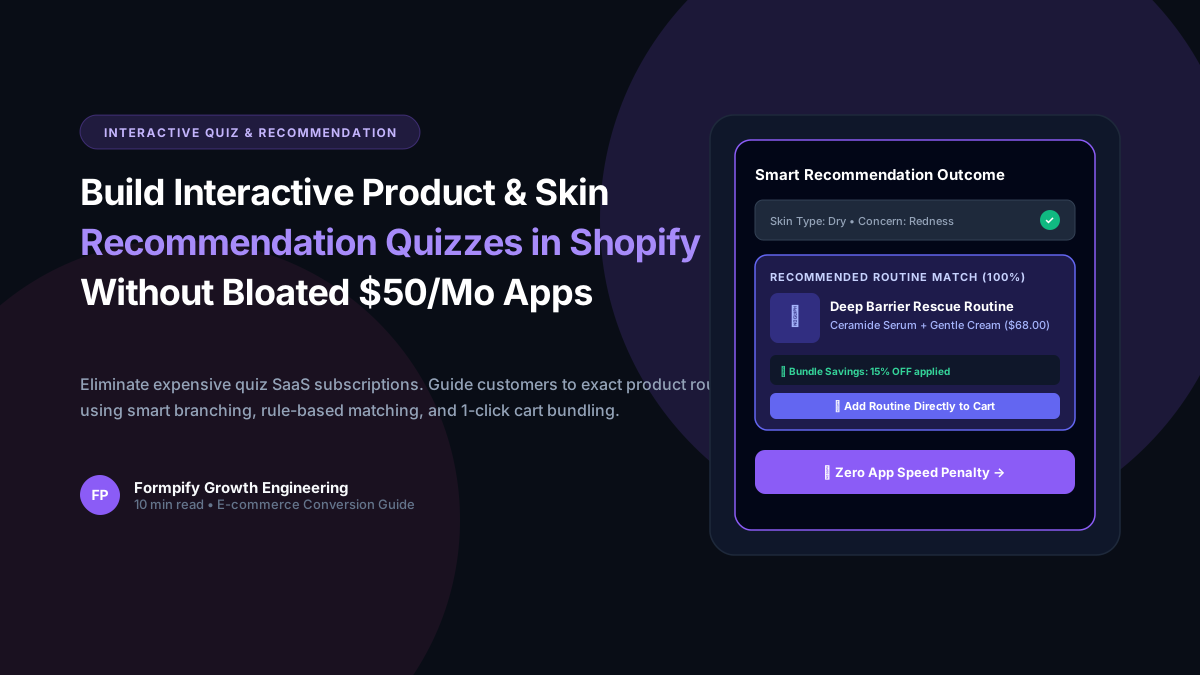
How to Build an Interactive Product Recommendation & Skincare/Size Quiz in Shopify (Without Bloated $50/mo Quiz Apps)
Traditional Shopify quiz apps charge $50–$300/month while injecting heavy scripts that devastate storefront performance. Learn how Formpify native Quiz Engine enables merchants to build custom recommendation quizzes with zero speed penalty, smart conditional branching, and instant 1-click AJAX cart bundling.
Ready to supercharge your Shopify forms?
Join thousands of merchants creating custom forms, surveys, and live cost calculators.